
The Human Brain: The Most Mysterious Thing in the Universe
The human brain shapes our perception, memories, dreams and sense of self. Discover why consciousness remains one of science's greatest mysteries.
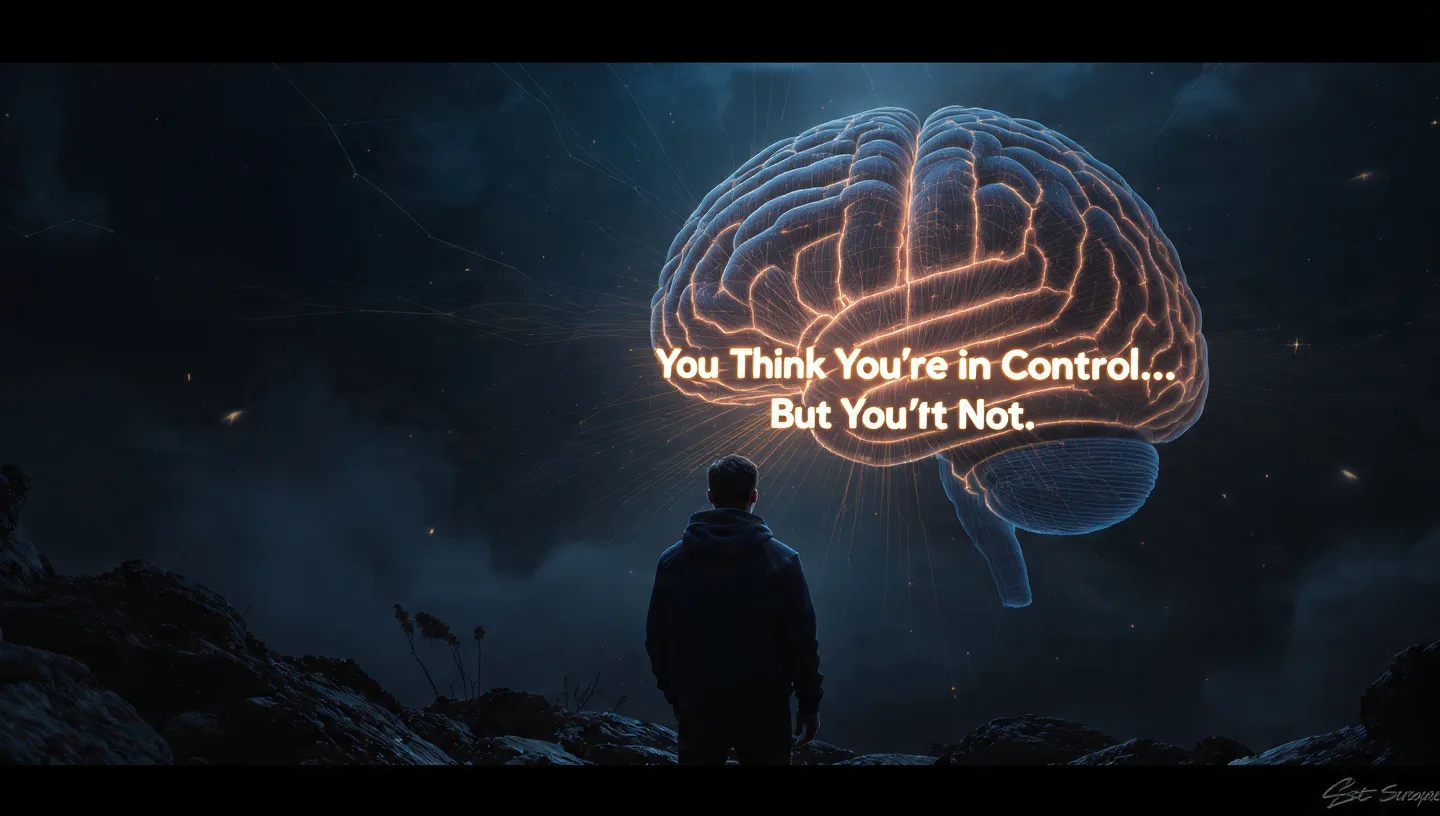
You probably feel like you know your own mind. After all, you live with your thoughts every day. You make decisions, recognize familiar faces, remember important moments, and experience emotions without having to think about how any of it works.
But behind these ordinary experiences is one of the most complex organs in the human body: the brain. Weighing roughly three pounds in the average adult, it contains billions of neurons that communicate through intricate electrical and chemical signals.
Somehow, the activity of this living network is connected to everything from recognizing a familiar voice to imagining the future. It helps shape your memories, emotions, dreams, decisions, and sense of identity. Yet many questions about how the human brain works remain unanswered.
So what makes the brain so fascinating? The deeper scientists investigate it, the more they discover about the remarkable processes behind everyday human experience—and the more interesting questions emerge.
Your Brain Doesn't Simply Show You Reality
It feels as though your eyes show you the world exactly as it is and your ears simply deliver the sounds around you. In reality, perception is an active process. Your brain continually interprets information gathered by your senses to help you understand your surroundings.
Your eyes detect light, your ears respond to sound waves, and receptors in your skin provide information about touch, pressure, and temperature. Your brain processes these signals alongside context, attention, and previous experience to create your moment-to-moment perception of the world.
This means that experiencing something and interpreting it are closely connected. Your brain doesn't simply receive a complete picture of reality; it helps organize incoming information into a meaningful experience.
Optical illusions make this easier to understand. Two shapes can appear to be different sizes even when they are identical, or a stationary image can seem to move. The effect reveals how strongly context and visual processing can influence what you perceive.
That doesn't mean the external world is imaginary or that your senses are useless. It means that your experience of the world depends partly on how your brain interprets the information available to it.
Your brain doesn't just receive information about the world. It actively interprets that information to help you make sense of what you experience.
Can You Trust Your Memories?
Think about a childhood memory that has stayed with you for years. Perhaps you remember a family holiday, a conversation with someone you loved, or a moment when something unexpected happened. You may feel as though you can still picture every detail.
But human memory doesn't work like a video recording stored inside the brain.
Remembering involves reconstructing information from different parts of memory. You may retain the central details of an event while forgetting smaller things, and your recollection can be influenced by later experiences, expectations, or information you've encountered since.
This helps explain why two people can remember the same event differently. Both may feel confident in their memories, even when their accounts disagree.
Research into false memories has also shown that people can sometimes remember events inaccurately or develop memories of experiences that never happened as they recall them. Such errors are not necessarily deliberate lies. Memory is a complex process, and confidence alone doesn't guarantee accuracy.
This is especially important when recalling emotional events or trying to remember something that happened long ago. Our memories can be meaningful without preserving every detail perfectly.
In other words, memory is not simply a record of the past. It is an active process that helps us retain and reconstruct information about our experiences.
Who Is Actually Making Your Decisions?
Every day, you make countless decisions, often without giving them much thought. You choose what to eat, decide how to respond to a message, and work out what to do next. Other decisions require careful thought and can shape your relationships, career, and future.
But here's a question that has fascinated scientists and philosophers for decades: what happens in your brain before you become consciously aware of making a decision?
In some experiments, researchers have detected patterns of brain activity before participants report becoming aware of their intention to perform a simple action. These findings have raised important questions about the relationship between unconscious brain processes and conscious choice.
However, interpreting these experiments is not straightforward. Simple laboratory tasks do not capture every aspect of real-world decision-making, and early brain activity does not automatically reveal what a person will ultimately choose.
Scientists have not proved that free will does not exist. Instead, this research highlights how much of the brain's activity occurs outside immediate conscious awareness.
The relationship between brain activity, conscious intention, and personal choice remains an active area of scientific and philosophical debate. It reminds us that even something as familiar as making a decision can involve processes we do not fully understand.
Why Do We Dream?
You fall asleep after a long day, and for a while, everything seems quiet. Then you find yourself in a dream. Perhaps you're talking to someone you haven't seen in years, exploring an unfamiliar place, or experiencing something that would be impossible in everyday life.
Dreams can feel surprisingly vivid. They may contain detailed scenes, familiar faces, strange conversations, and powerful emotions. Sometimes you don't realize anything is unusual until you wake up and think about what happened.
Sleep is not simply a period when the brain switches off. Brain activity changes throughout the night, cycling through different stages with distinct patterns. Vivid dreams are often associated with rapid eye movement (REM) sleep, although dreaming can also occur during other stages of sleep.
Why do we dream? Researchers have proposed several explanations, including possible connections with memory processing, emotion, and the brain's activity during sleep. However, there is no single explanation that fully accounts for every dream or establishes one universal purpose for dreaming.
Dreams can combine fragments of memories, emotions, and imagination into experiences that seem to make sense while we're asleep. Exactly how and why the brain creates these experiences remains an intriguing area of research.
The next time you wake up from a particularly strange dream, remember that your sleeping brain has been active throughout the night. The experience may feel like a story, but the science behind dreaming is much more complex than it first appears.
Your Brain Can Rewire Itself
One of the most encouraging discoveries in neuroscience is that the brain is not completely fixed after childhood. Throughout life, it can adapt in response to learning, practice, experience, and changes in the environment. Scientists call this ability neuroplasticity.
When you learn to play an instrument, practice a new language, develop a skill, or repeatedly perform a challenging task, the nervous system can change in ways that support learning. These changes may involve the strength of connections between neurons and the organization of networks involved in particular activities.
This is not an overnight transformation, and the brain doesn't change in exactly the same way for everyone. Learning depends on many factors, including practice, sleep, attention, age, and the type of skill being developed.
Neuroplasticity also helps explain how the brain can adapt after certain injuries, although recovery varies considerably depending on the affected areas, the severity of the injury, and the rehabilitation available.
The important point is that learning is more than simply collecting facts. Experience can influence the brain's structure and function over time.
Your brain today is shaped by a lifetime of experiences, habits, challenges, and learning. That capacity to adapt is one of the reasons the human brain remains such an important subject of scientific research.
The Biggest Mystery: Consciousness
Perhaps the most profound question about the human brain is not simply how it remembers, learns, or makes decisions. It is how we experience anything at all.
Think about watching a sunset. You don't merely process information about wavelengths of light. You experience colors, notice the changing sky, and perhaps feel a sense of calm or wonder. When you touch something hot, you don't just detect a physical signal. You experience pain.
These personal, first-person experiences are often described as subjective consciousness. They include being aware of your surroundings, having thoughts and feelings, and experiencing the world from your own perspective.
Neuroscientists have identified many brain processes and networks associated with perception, attention, wakefulness, and conscious awareness. Researchers continue to investigate how activity across these systems relates to what people experience.
Yet a major question remains: how do physical processes in the brain relate to the subjective feeling of seeing, hearing, thinking, or being aware?
Scientists have developed competing theories of consciousness and are testing them through experiments. There is meaningful progress in understanding the brain systems involved, but no universally accepted explanation resolves every aspect of subjective experience.
This is what makes consciousness such a compelling scientific mystery. We can study the brain from the outside using instruments and experiments, but we also know consciousness through our own direct experience.
Understanding how those two perspectives fit together remains one of the most challenging questions at the intersection of neuroscience, psychology, and philosophy.
The Brain Trying to Understand Itself
There is something remarkable about the fact that the human brain can investigate the world around it and ask questions about its own workings.
Using observation, mathematics, experiments, and technology, humans have learned about distant galaxies, black holes, microscopic organisms, and the particles that make up matter. We have also developed tools to study the brain itself, from recording electrical activity to imaging changes in blood flow associated with different tasks.
Neuroscience brings together biology, psychology, medicine, chemistry, physics, and computer science to investigate how the nervous system functions. Each field provides a different way to examine the organ that makes thought and scientific discovery possible.
Of course, the brain does not understand itself perfectly simply because it can study itself. Researchers must test ideas, compare evidence, and revise explanations when new findings emerge.
Still, the process is extraordinary. The same biological organ that helps us explore the universe also allows us to question our own thoughts, investigate our memories, and wonder what consciousness really means.
The Universe Inside Your Mind
Consider everything that happens during an ordinary day. You recognize a friend's face, hear a familiar song, remember something from yesterday, imagine what tomorrow might bring, and react emotionally to events around you.
These experiences depend on complex interactions within your brain and nervous system. Sensory information, memories, attention, emotions, and expectations all contribute to how you experience a situation.
This does not mean that the outside world exists only in your mind. Rather, it means that your experience of the world is shaped by the way your brain processes information from your surroundings and from your own body.
The more we learn about the human brain, the clearer it becomes that familiar experiences involve intricate biological processes. Seeing a face, remembering a conversation, feeling nervous, or imagining a distant planet may seem effortless, but each depends on systems that scientists are still working to understand in detail.
And perhaps that is what makes the brain so fascinating. The universe contains mysteries on an enormous scale, from the behavior of distant galaxies to the fundamental nature of matter. Yet the organ we use to investigate those mysteries has questions of its own.
The human brain is not literally the universe, nor is it the only mystery worth exploring. But it is the biological system through which each of us thinks, experiences, learns, and asks questions about existence.
The brain helps us explore the universe outside us while leaving us with one of science's most fascinating questions: how does the activity of this remarkable organ give rise to the experience of being us?
If you enjoy exploring the science of the human mind, the mysteries of consciousness, and the discoveries that challenge what we think we know, keep exploring with UltraFactX Studio.
Sources & Further Reading
- The Neural Correlates of Consciousness: An Update — University of Wisconsin–Madison Other (Mar 1, 2018) DOI: 10.1196/annals.1440.004
- Time of Conscious Intention to Act in Relation to Onset of Cerebral Activity (Readiness-Potential) — University of California, San Francisco Other (Sep 1, 1983) DOI: 10.1093/brain/106.3.623
- Neuroplasticity Subserving Motor Skill Learning — National Institute of Neurological Disorders and Stroke, NIH Other (Nov 3, 2011) DOI: 10.1016/j.neuron.2011.10.008
Frequently Asked Questions
UltraFactX Editorial Team
Official editorial and research team at UltraFactX Studio.
Related Discoveries


Explore More from UltraFactX Studio
Dive deeper into the universe, nature, physics, human psychology, and the mysteries of ancient civilization.