
The Places in Space We May Never Be Able to Reach
Space looks endless, but cosmic expansion may leave some distant galaxies forever beyond our reach, no matter how advanced technology becomes.
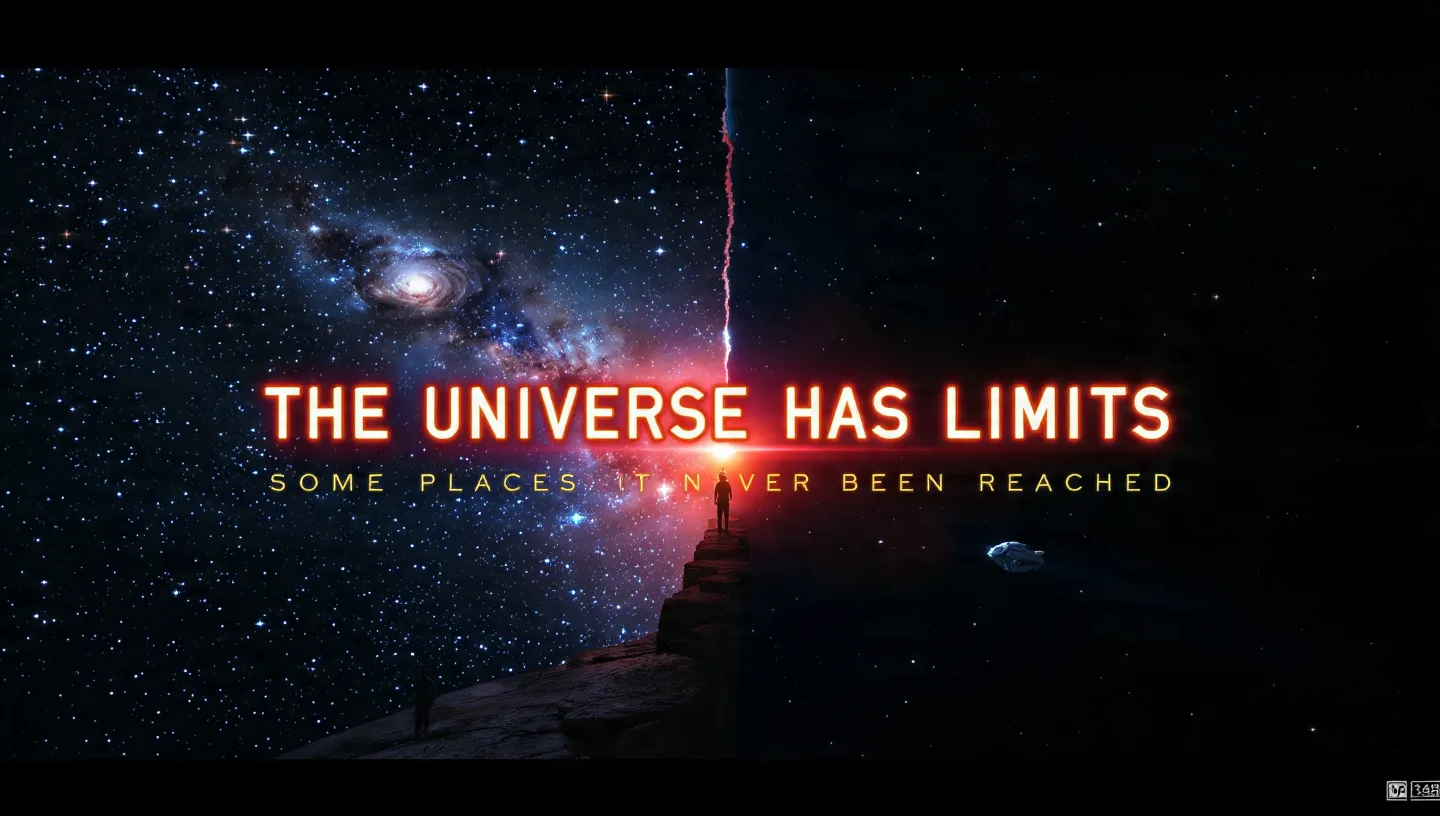
Space seems like the ultimate open road. Billions of galaxies stretch across the cosmos, each containing stars, planets, and possibly worlds unlike anything we have ever seen. It is tempting to imagine that, with enough time and sufficiently advanced technology, humanity could eventually travel anywhere in the universe.
But the universe has a surprising limitation: not every destination may be reachable, no matter how advanced our technology becomes.
The reason is not simply the enormous distances involved. The universe itself is expanding, and that expansion may permanently separate us from parts of the cosmos. Some galaxies could remain beyond our reach even if future civilizations developed spacecraft far more capable than anything we can build today.
Understanding why requires looking at cosmic expansion, the limits of the observable universe, and a boundary known as the cosmic event horizon.
Why Is the Universe Expanding?
One of the most difficult things to picture about the universe is that space itself is expanding.
On the largest cosmic scales, distant galaxies are generally moving farther apart because the space between them is stretching. This is different from an ordinary explosion, in which objects fly outward through an already existing space. Instead, the distances between widely separated, gravitationally unbound regions of the universe increase as the universe expands.
Observations also show that this expansion is accelerating. Scientists associate the acceleration with something called dark energy, although its underlying nature remains one of the major unanswered questions in cosmology.
This expansion has consequences that are difficult to imagine. At sufficiently large distances, the rate at which the distance between us and a galaxy increases can exceed the speed of light.
That does not violate Einstein's theory of relativity. The speed-of-light limit applies to objects and information moving locally through space. It does not prevent the distance between extremely faraway regions from increasing faster than light because space itself is expanding.
Imagine two distant galaxies separated by an enormous amount of expanding space. Even if a spacecraft could travel close to the speed of light, the space between the spacecraft and its destination would continue to evolve during the journey.
As a result, some destinations may be impossible to reach from Earth, not merely difficult to reach. The limits of space exploration may be shaped by the evolution of the universe itself, rather than by the performance of our engines.
The Cosmic Event Horizon: A Boundary We Cannot Cross in Practice
One important concept in understanding unreachable galaxies is the cosmic event horizon.
The cosmic event horizon describes a limit to the regions of the universe from which signals sent now or in the future can ever reach us. Its existence is connected to how the universe expands over time.
To picture the idea, imagine trying to send a boat across a river that keeps getting wider. If the river widens in the right way, there may be places from which a boat can never reach the opposite bank, even if it keeps moving forward.
The universe is much more complicated than a river, but the comparison captures the central idea: the distance to a destination is not the only factor that matters. The way space changes during the journey matters too.
A galaxy beyond our cosmic event horizon can still exist, with its own stars, planets, and other structures. The limitation is that light or another signal sent from that region today may never reach Earth.
This also means that seeing a distant object does not automatically tell us whether we could travel to it. Light arriving at our telescopes may have started its journey billions of years ago, when the universe was at a different stage of its evolution.
Some objects we can observe today may therefore be beyond the reach of any signal they send now. The light we receive tells us about their past, not necessarily about what they can communicate to us in the future.
The cosmic event horizon is not a physical wall or a sharp edge in space. It is a boundary determined by the universe's expansion history and the paths that light can take through spacetime.
The Observable Universe Is Not the Entire Universe
When scientists talk about the observable universe, they are not necessarily describing everything that exists.
The observable universe is the region from which information has had time to reach us since the early universe became transparent enough for light to travel freely. Because the universe has a finite age and light travels at a finite speed, we can observe only a limited portion of the cosmos.
Beyond that region, there may be many more galaxies and vast structures. The universe could extend far beyond what we can observe, and it may even be infinite. Current observations do not establish its total size.
The important distinction is that the observable universe is defined by what information has been able to reach us, while the cosmic event horizon concerns what information can reach us in the future.
These boundaries are related, but they are not the same.
Some regions outside our current observable universe may become observable as time passes, depending on their location and the universe's expansion history. Other regions may remain permanently beyond our ability to receive signals from them.
As the universe continues expanding, distant galaxies can also become increasingly difficult to observe. Their light may become stretched to longer wavelengths and fainter, making them harder for future observers to detect. What future astronomers can see will depend on both cosmic expansion and the limits of their instruments.
In other words, the universe we can study is not necessarily the universe in its entirety. There may be far more beyond our observational horizon than we will ever be able to examine directly.
The Boötes Void: A Vast Region With Few Galaxies
Distance is not the only thing that makes the universe surprising. Some regions stand out because they contain far fewer galaxies than astronomers would expect.
One famous example is the Boötes Void, an enormous region of space known for its unusually low concentration of galaxies.
The word "void" can be misleading. It does not mean that absolutely nothing exists inside the region. Cosmic voids are areas where matter is less concentrated than it is in surrounding regions. They can still contain galaxies, gas, and other matter, although these are spread much more thinly.
To understand why such regions exist, it helps to picture the universe on its largest scales. Galaxies are not distributed perfectly evenly. Gravity has drawn matter into dense clusters and long filaments, leaving enormous, relatively empty spaces between them.
This pattern is known as the cosmic web. Its dense regions contain many galaxies, while its voids have comparatively few.
Over billions of years, gravity helped matter gather into the structures we observe today. The Boötes Void is one example of the resulting large-scale pattern.
Although a cosmic void is not the same thing as an unreachable region, it offers another reminder that the universe is far more varied than a simple picture of stars scattered evenly through space might suggest.
Black Holes Have Their Own Uncrossable Boundary
Black holes offer a different example of a boundary that places severe limits on what we can observe or retrieve.
A black hole is surrounded by a boundary called an event horizon. Unlike the cosmic event horizon, which is related to the expansion of the universe, a black hole's event horizon is a region-specific boundary in spacetime.
It is not a solid surface. A spacecraft falling into a sufficiently large black hole would not necessarily encounter a physical barrier at the moment it crossed the horizon.
Instead, the event horizon marks the point beyond which a signal cannot escape to the distant outside universe under our current understanding of general relativity. Once something crosses it, even light cannot travel back out to communicate with the outside world.
This is why black holes cannot be observed in the same way as ordinary stars. Astronomers study them through their effects on nearby matter, the motion of surrounding stars, gravitational waves, and other observable evidence.
Black holes also raise a major question in modern physics: what happens to information about the matter that falls inside?
This is known as the black hole information paradox. Quantum theory suggests that information should not simply be destroyed, while the physics of black holes creates difficult questions about how that information can be preserved and understood.
Researchers continue to investigate the problem using ideas from quantum mechanics, general relativity, and theories of quantum gravity. A complete understanding of what happens to information in black holes remains an important goal of theoretical physics.
Black holes and cosmic expansion involve different physical processes, but both show that the universe places limits on what can communicate with us and what we can investigate directly.
Why a Better Rocket Cannot Solve Every Space Travel Problem
It is natural to think of space exploration as an engineering challenge. If a spacecraft is too slow, engineers try to build a faster one. If a journey takes too long, they investigate more efficient propulsion. If astronauts cannot survive the trip, they develop better life-support systems.
That approach has helped humanity explore space, and future technology could make journeys within our Solar System much more practical.
But there is a difference between a challenge that better engineering might overcome and a limit imposed by fundamental physics.
According to our current understanding, an object with mass cannot accelerate to the speed of light. The closer it gets to that speed, the more energy is required to accelerate it further.
Even a spacecraft travelling extremely close to the speed of light would not automatically be able to reach every galaxy. Its journey would take place in an expanding universe, and some destinations may lie beyond the paths that any future spacecraft could follow to reach them.
The exact limits depend on the destination, the spacecraft's trajectory, and the universe's expansion history. It would be misleading to say that every distant galaxy is unreachable, but it is equally misleading to assume that sufficiently advanced engines would make every region accessible.
This is what makes cosmic horizons so important. They remind us that space travel is not just about how quickly we can move. It is also about whether a route through spacetime to a particular destination is physically possible at all.
Could There Be Worlds We Will Never Visit?
Beyond the regions we can explore, the universe may contain an astonishing range of worlds. There could be planets with deep oceans, moons with unusual landscapes, and planetary systems built around stars very different from our Sun.
Some worlds may have conditions that scientists have not yet imagined. Others might offer clues about how planets form, how life could emerge, or how common the ingredients for life are throughout the cosmos.
It is also possible that life exists beyond Earth. Scientists have not yet confirmed extraterrestrial life, but the discovery of so many planets has made the search for potentially habitable environments an important part of modern astronomy.
Some of these worlds, if they exist in regions permanently beyond our reach, might never be visited by humanity. Depending on their location, we might also never receive signals from them.
That does not mean every planet outside our current reach is forever hidden from observation. Different worlds fall under different cosmic limits, and our ability to detect them depends on their distance, the light or signals they emit, and how the universe evolves.
Still, the possibility is striking: there may be places with their own histories and natural wonders that we will never experience firsthand.
We could spend generations improving our telescopes and spacecraft, learning more about the cosmos with each discovery, while some destinations remain inaccessible for reasons no engine can solve.
Seeing a Galaxy Does Not Mean We Can Reach It
On Earth, seeing a distant mountain or island usually suggests that we could eventually find a way to get there. The journey might be difficult, but roads, boats, aircraft, and other technologies can often make it possible.
Space works differently.
A telescope can collect light from a galaxy billions of light-years away. That light carries information about the galaxy as it was when the light began its journey. It does not guarantee that a spacecraft leaving Earth today could follow the same path and arrive at the galaxy.
Light and spacecraft also experience the expanding universe differently in practical terms. Light travels at the universal speed limit, while a spacecraft with mass must travel more slowly. Meanwhile, the distances between faraway regions can continue changing throughout the journey.
For destinations within our cosmic reach, travelling there could still be extraordinarily difficult because of distance, travel time, energy requirements, and the challenges of keeping a spacecraft operational.
For other destinations, cosmic expansion may make arrival impossible, even in principle, under the standard cosmological model.
That distinction changes how we think about the night sky. A galaxy can be a real, observable part of the universe without being a destination humanity could ever reach.
How Far Could Future Space Exploration Go?
These cosmic limits do not mean humanity's exploration of space is about to stop. There is still an enormous amount we can learn and explore within our own cosmic neighbourhood.
Future missions could investigate the Moon in greater detail, send astronauts to Mars, study the icy moons of the outer Solar System, and explore distant planets using increasingly capable robotic spacecraft.
New telescopes may reveal planets around other stars, help scientists study the atmospheres of those worlds, and provide a clearer picture of how galaxies evolved over cosmic time.
Interstellar travel would be a much greater challenge. The nearest stars are several light-years away, and reaching them would require technologies far beyond today's crewed spacecraft. Even so, scientific proposals for faster robotic probes and advanced propulsion continue to explore what might be possible.
Beyond our local region, however, the accelerating expansion of the universe may impose a fundamental limit on how far any civilization can travel or communicate.
The future of exploration will therefore involve two different kinds of progress: developing better technology to reach places that are physically accessible, and understanding the boundaries beyond which travel may not be possible.
Learning where those limits lie is not a failure of exploration. It is part of understanding the universe more accurately.
The Universe May Always Be Bigger Than Our Reach
For thousands of years, people have looked at the sky and wondered what lies beyond the visible stars. We developed better instruments, built observatories, launched satellites, and sent robotic spacecraft to other worlds.
Each breakthrough has revealed a universe more complex and more extraordinary than we once imagined.
Yet every discovery has also raised new questions. How much of the universe exists beyond what we can observe? How many distant galaxies can we ever reach? And what can the laws of physics tell us about the limits of exploration?
The answers point to a sobering possibility. The universe may contain places that are real but forever beyond our ability to visit. Some regions may never send us new information, while others may remain visible only through light that began its journey long before humanity existed.
These limits do not make our discoveries less meaningful. In many ways, they make the opportunity to study the cosmos even more remarkable.
We live on a small planet around an ordinary star, yet we can use mathematics, telescopes, and scientific observations to understand events that happened billions of years ago and regions far beyond our physical reach.
Perhaps the goal of space exploration was never simply to reach every corner of the universe. It may also be to understand what the universe allows, what it prevents, and why those boundaries exist.
The cosmos is vast, and our journey into it has only just begun. We may never visit every place that exists, but we can continue expanding our understanding of the universe—one discovery at a time.
Sources & Further Reading
- Universe Is Expanding — NASA Government Agency
- xploring the Mystery of Our Expanding Universe — NASA Jet Propulsion Laboratory Government Agency
- Quantum strong cosmic censorship and black hole evaporation — An HI Survey of the Bootes Void. I. The Data Government Agency
- The mystery of Local Expansion of the Universe Void — NASA Cosmicopia Government Agency
Frequently Asked Questions
UltraFactX Editorial Team
Official editorial and research team at UltraFactX Studio.
Related Discoveries
Explore More from UltraFactX Studio
Dive deeper into the universe, nature, physics, human psychology, and the mysteries of ancient civilization.