
Places in Space Humans Will Never Reach: The Universe Has Limits
Some regions of the universe may remain forever beyond our reach. Explore cosmic horizons, the Boötes Void, and how the expanding universe limits space exploration.
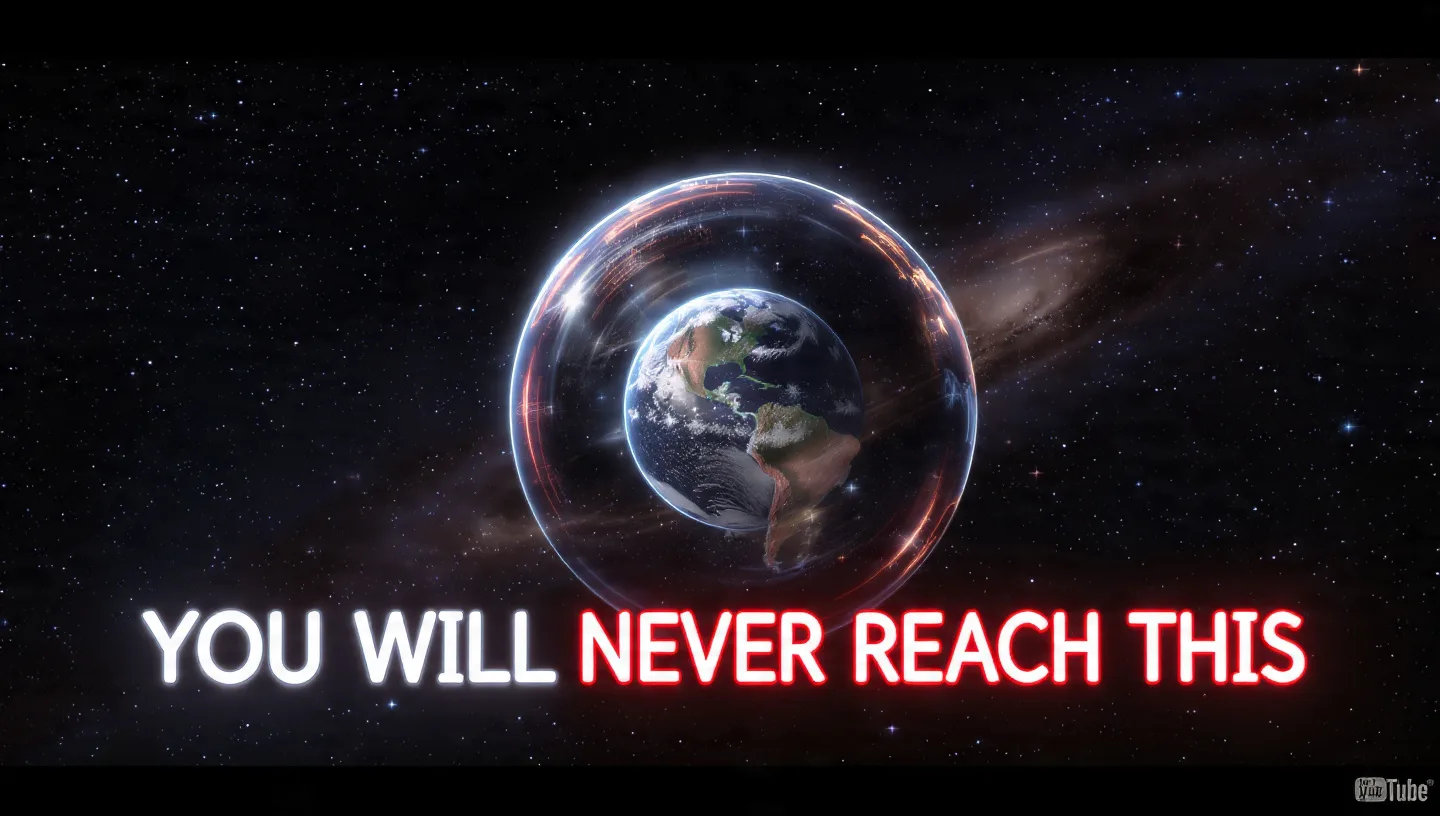
The Universe Is Bigger Than We Can Ever Explore
When we look up at the night sky, it is easy to imagine an endless universe filled with stars, distant galaxies, mysterious black holes, and planets we have yet to discover. Every new observation seems to reveal something more incredible about the cosmos.
But there is a surprising possibility that challenges our usual idea of exploration: humanity may never be able to reach or observe every part of the universe.
This limitation is not simply a matter of building faster spacecraft or developing more advanced technology. The universe is expanding, and that expansion can place some regions permanently beyond our reach. Light from certain distant objects may never arrive here, while journeys to some regions could remain impossible no matter how advanced our future technology becomes.
Scientists have also discovered that the expansion of the universe is accelerating. This acceleration is commonly attributed to dark energy, a name given to whatever is driving the observed effect. Although dark energy plays a major role in modern cosmology, its true nature remains one of science's biggest unanswered questions.
When Space Itself Moves Away
One of the strangest discoveries in astronomy is that some extremely distant galaxies are receding from us faster than the speed of light.
At first, that might sound as though these galaxies are breaking Einstein's famous cosmic speed limit. But there is an important distinction: the galaxies are not locally racing through space faster than light. Instead, the space between distant galaxies is expanding, increasing the distance between them and us.
Imagine drawing several dots on the surface of a balloon. As you inflate it, the dots move farther apart even though they are not crawling across the rubber. The expanding balloon is only an analogy, but it helps illustrate how distances between faraway galaxies can increase as the universe expands.
Over enormous cosmic distances, this expansion has a remarkable consequence. Light emitted by some distant galaxies today may never reach us, because the space between those galaxies and our location continues to expand in a way that prevents the light from ever arriving.
This brings us to one of the most fascinating concepts in cosmology: the cosmic event horizon.
The Cosmic Event Horizon
The cosmic event horizon is often confused with the edge of the observable universe, but the two describe different limits.
The observable universe is the region from which light has had enough time to reach us since the universe began. The cosmic event horizon, on the other hand, concerns the future: it marks a limit beyond which signals sent now cannot reach us at any point in the future under the universe's current expansion history.
This does not mean the universe suddenly ends at that boundary. There is no known physical wall separating reachable space from everything beyond it.
Far beyond our cosmic horizon, stars can continue to form, galaxies can collide, and supernovae can explode. Entire planetary systems may develop while the universe carries on its evolution.
The extraordinary part is that events happening in some of those distant regions may never become visible to us. Their light and other signals simply cannot reach our location, even given unlimited waiting time.
In other words, parts of the universe may continue to exist and change while remaining forever beyond our future view. It is one of the clearest reminders that the universe is far larger than the part we can ever explore.
Why Faster Spacecraft Wouldn't Solve Everything
It is tempting to believe that if humanity could build a sufficiently powerful spacecraft, we could eventually travel anywhere in the cosmos. After all, many destinations that once seemed impossible are now within the reach of modern astronomy and space exploration.
But cosmic expansion creates a more fundamental challenge than simply travelling too slowly.
A spacecraft can move through space, but it cannot switch off the expansion of the universe. Even if future engines allowed us to travel at a substantial fraction of the speed of light, some extremely distant regions would remain beyond our reach because of how spacetime expands.
This means the problem is not necessarily a lack of fuel, better engines, or more advanced spacecraft. For certain destinations, the obstacle is built into the large-scale structure of the universe itself.
The deeper limits involve the relationship between space, time, and causality—the physical rules that determine whether matter, light, or information can travel from one place to another.
The Boötes Void: A Giant Empty Region
The universe is not evenly filled with galaxies. Some regions contain enormous clusters of galaxies, while others have remarkably little matter. These vast, underpopulated regions are known as cosmic voids, and they reveal a great deal about how the universe is structured.
One of the best-known examples is the Boötes Void, a huge region of space in the direction of the constellation Boötes. It became famous because surveys revealed far fewer galaxies inside it than astronomers would typically expect across such an enormous volume.
The Boötes Void is often described as roughly 330 million light-years across, making it one of the most striking large-scale voids identified by astronomers. It attracted scientific attention in the early 1980s, when researchers reported this unusually underpopulated region.
Despite its dramatic name, the Boötes Void is not completely empty. It contains some galaxies, and its defining feature is its unusually low density of galaxies compared with surrounding regions.
These voids are an important part of the universe's cosmic web. On the largest scales, galaxies form clusters, sheets, and long filaments, with enormous voids separating many of these structures.
The Boötes Void offers a striking example of just how varied the universe can be. Even within the portion of the cosmos we can study, there are structures so enormous that their scale is difficult to imagine.
Black Holes Have Their Own Boundaries
Cosmic expansion is not the only phenomenon that raises questions about the limits of exploration. Black holes contain another famous boundary, one that changes what can escape into the outside universe.
This boundary is called the black hole event horizon. It marks the point beyond which nothing—not even light—can escape to the distant outside universe according to classical general relativity.
Once an object crosses the event horizon, it cannot send a signal back out to distant observers. This makes the region inside the horizon fundamentally different from the space surrounding a black hole.
Astronomers cannot directly observe events taking place inside a black hole's event horizon. Instead, they study black holes through their effects on nearby stars, hot gas, radiation, and the motion of surrounding matter. These observations have helped scientists learn a great deal about how black holes form and behave.
Yet major questions remain. Researchers are still working to understand the deepest interior of black holes and how gravity fits together with quantum physics. Solving these problems could reveal important details about the fundamental laws governing the universe.
The Mystery of Black-Hole Information
One of the most challenging questions in modern theoretical physics is known as the black-hole information paradox. It raises a basic question: what happens to the information describing matter that falls into a black hole?
In quantum mechanics, the evolution of an isolated physical system is expected to preserve information. But black holes seem to create a puzzle when quantum theory and gravity are considered together.
Stephen Hawking's theoretical work showed that black holes can emit radiation, now known as Hawking radiation. If a black hole gradually loses mass through this process, it may eventually evaporate. That creates a difficult question: if the black hole disappears, what happens to the information associated with everything that fell inside?
Over the years, physicists have developed several approaches to this problem, and research has made significant progress toward understanding how information might be preserved. However, explaining the paradox in a complete and universally accepted way remains an important challenge in fundamental physics.
The information paradox illustrates how even well-established scientific theories can raise profound questions when they are combined. It is a reminder that some of the universe's most important mysteries are not just about distant places, but also about the basic nature of reality.
Some Limits Cannot Be Solved With Technology
Imagine a future in which humanity has developed incredibly advanced propulsion systems, powerful computers, and spacecraft capable of travelling between stars. Imagine, too, that civilization survives for millions or even billions of years, giving us far more time to explore than we have today.
Even in that extraordinary future, there may still be regions of the universe we cannot reach.
Technology can help us overcome many practical obstacles, from long travel times to the challenges of surviving in space. But it cannot automatically remove the fundamental limits imposed by the laws of physics.
Cosmic expansion and the limits of causality mean that some regions may remain beyond our ability to visit or communicate with. No improvement in spacecraft design can guarantee access to every distant galaxy.
That is what makes this idea so fascinating: some limits to space exploration may not be engineering problems at all. They may be consequences of how spacetime itself works.
Our Small Window Into a Huge Universe
Despite these limitations, humanity has already achieved extraordinary things. We have observed galaxies billions of light-years away, discovered planets orbiting other stars, detected gravitational waves, studied black holes, and measured how the universe expands.
Powerful telescopes allow astronomers to look deep into cosmic history. Because light takes time to travel, observing distant objects also means seeing them as they were long ago. The farther we look, the further back in time we can investigate the universe's evolution.
But the observable universe is not necessarily the entire universe. It is the region we can study using signals that have reached us, and the full cosmos may extend far beyond it.
There could be countless galaxies, stars, and cosmic events beyond our observational limits. Some regions may be impossible to observe today, while others may already lie beyond the reach of any signal we could send now or receive in the future.
Our view of the cosmos is extraordinary, but it is not unlimited. Every discovery helps us understand more, while also revealing how much remains beyond our knowledge.
The Universe Doesn't Promise Us Access to Everything
We often think of exploration as a challenge that future technology will eventually solve. If a destination is too distant today, perhaps a faster spacecraft will reach it tomorrow. If a mystery seems impossible to explain, perhaps a new discovery will change everything.
That approach has helped drive scientific progress. But the universe may have boundaries that cannot be overcome simply by waiting for better technology.
Some places may not merely be difficult to reach. They may be fundamentally unreachable from our location.
Far across the cosmos, stars are being born, galaxies are changing, and enormous structures continue to evolve over billions of years. Yet the light from some of those events may never arrive here.
We may never witness those events directly. We may never send a spacecraft to those regions. And in some cases, we may never be able to obtain the information needed to know exactly what happens there.
That possibility makes the universe feel both more mysterious and more extraordinary. The cosmos is not limited to what humanity can see, measure, or explore.
The Final Boundary
The universe does not have a simple edge with a sign announcing that we cannot go any farther. Its limits are much more subtle, shaped by distance, cosmic expansion, the passage of time, and the finite speed at which information can travel.
These boundaries do not make space less fascinating. In many ways, they make it even more intriguing. They challenge us to understand not only what exists in the universe, but also what can ever become accessible to us.
There is still an enormous cosmos to explore, from distant galaxies and strange exoplanets to black holes and the earliest stages of cosmic history. But there may also be regions that will remain beyond our reach, no matter how far our scientific knowledge advances.
Perhaps that is one of astronomy's most humbling lessons: our curiosity may be limitless, even when our ability to explore is not.
We aren't limited only by how far we can travel.
We're also limited by the universe itself.
If you enjoy exploring cosmic mysteries, mind-blowing science, and the unanswered questions shaping our understanding of reality, follow UltraFactX Studio for more fascinating discoveries about space, science, and the universe.
Sources & Further Reading
- A Million Cubic Megaparsec Void in Boötes — American Astronomical Society / The Astrophysical Journal Research Institution (Sep 1, 1981) DOI: 10.1086/183623
- Information Loss in Black Holes — American Physical Society / Physical Review D Research Institution (Oct 18, 2005) DOI: 10.1103/PhysRevD.72.084013
- Lessons from the Information Paradox — Elsevier / Physics Reports Research Institution (Jan 12, 2022) DOI: 10.1016/j.physrep.2021.10.001
- What Is Dark Energy? Inside Our Accelerating, Expanding Universe — NASA Science Government Agency
Frequently Asked Questions
UltraFactX Editorial Team
Official editorial and research team at UltraFactX Studio.
Related Discoveries
Explore More from UltraFactX Studio
Dive deeper into the universe, nature, physics, human psychology, and the mysteries of ancient civilization.